


Red Light Therapy Eye Devices: Mask vs Patches vs Glasses
Short answer: all three of SOLO RED LIGHT's eye devices treat the thin skin around the eyes with red and near-infrared light, but they are built for different routines. An eye mask is the most focused, comfortable option for a dedicated under-eye session. LED eye patches add blue light and are the easiest to travel with. EMS eye glasses combine light with microcurrent stimulation and let you stay hands-free. Pick by how you will actually use it, not by which sounds strongest.
This guide compares the three formats, explains what each can realistically do for dark circles and fine lines, and shows how to fit them into a routine alongside a full-face device.
Why the eye area gets its own device
The skin under and around the eyes is the thinnest on the body. It sits over a dense network of small vessels, shows fluid retention quickly, and creases with every expression. That combination makes it the first place tiredness shows — and it also means a full-face mask may not sit comfortably or evenly around the eyes.
A purpose-made eye device curves to the eye area and delivers a controlled dose exactly where the skin is thinnest. That precision is the whole point.
The three formats at a glance
|
Format |
Light |
Best for |
Hands-free? |
|
Silicone eye mask |
Red ~660 nm + near-infrared ~850 nm |
A dedicated, comfortable under-eye session |
Yes, while lying down |
|
LED eye patches |
Red + blue light |
Travel, quick sessions, targeting puffiness and blemishes |
Yes |
|
EMS eye glasses |
Red light + EMS microcurrent |
Firming and a lifted look while you do other things |
Yes, even upright |
Silicone eye mask
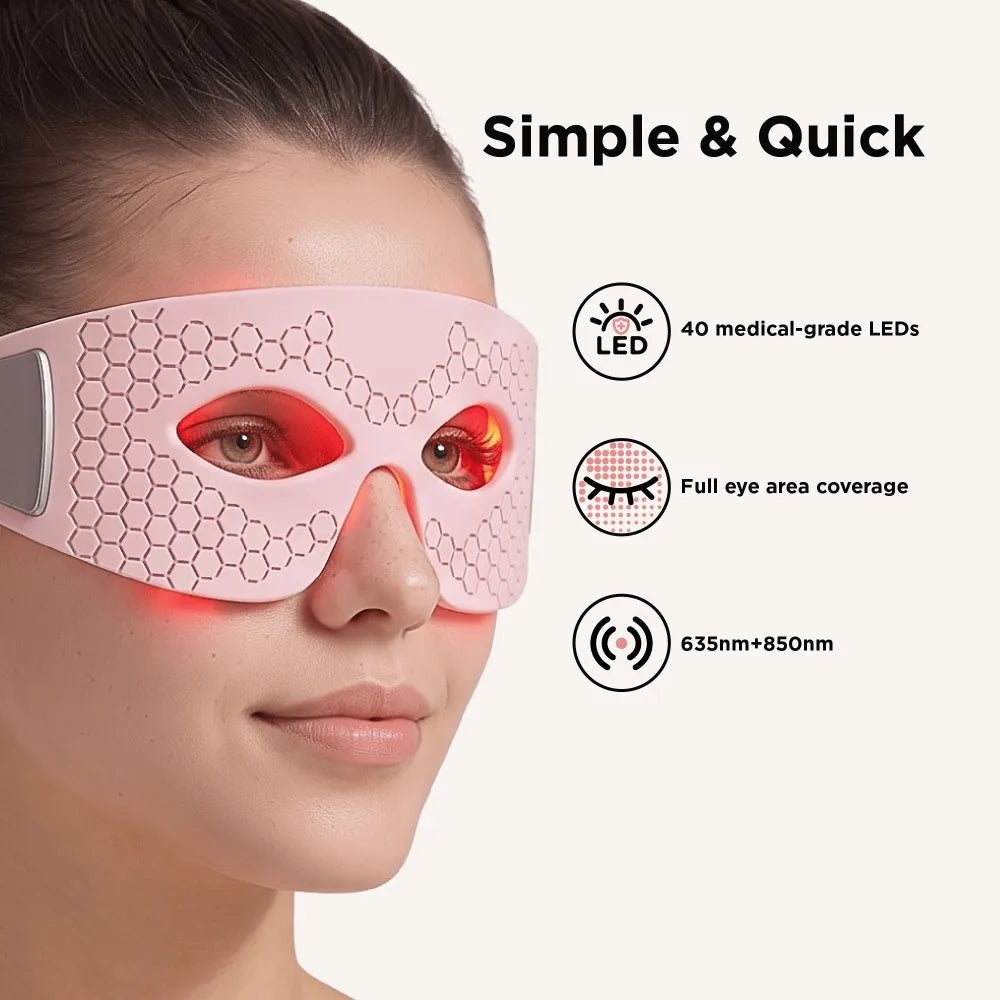
The Silicone Red & Infrared LED Eye Mask is the most dedicated option. Because it is soft and moulds to the face, it stays in place and delivers red and near-infrared light evenly across the under-eye and crow's-feet area. It is the format to choose if your main concern is fine lines, crêpiness and a tired look, and you want a calm, relaxing session.
· Best for: fine lines, dullness, mild puffiness, a wind-down routine.
· Trade-off: it treats the eye area only, and you use it lying down or reclined.
LED eye patches
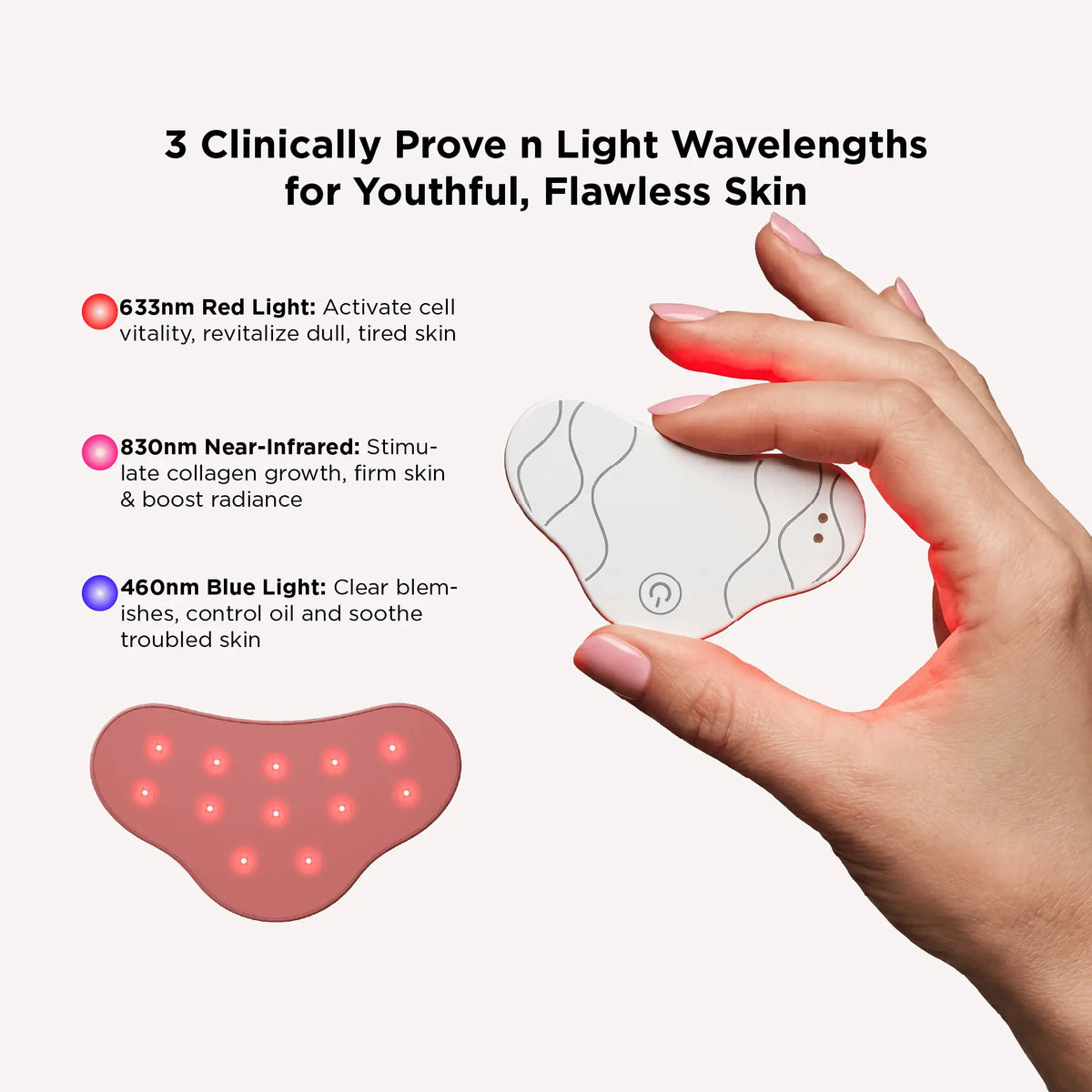
Red & Blue Light Eye Patches pair red light with blue light, which makes them useful if the area is blemish-prone as well as tired. They are compact, easy to store and the most travel-friendly of the three, so they suit people who want to keep the routine going on the move.
· Best for: travel, quick sessions, puffiness, and skin that also breaks out.
· Trade-off: smaller coverage than a full eye mask, and best used in short sessions.
EMS eye glasses
The EMS & Red Light Therapy Eye Glasses add microcurrent stimulation to red light. That means they do two things at once: light for the skin over weeks, and a gentle electrical current that some people find gives a temporarily firmer, more awake look. They are the most hands-free option — you can wear them while reading or working.
· Best for: firming, a lifted look, and a routine you can wear while doing something else.
· Trade-off: EMS needs a little care (no use if you have a pacemaker or are pregnant), and the effect of the current is temporary.

Which should you choose?
· Fine lines and a calm routine: the silicone eye mask.
· Travel and blemish-prone under-eyes: the LED eye patches.
· Firming and hands-free use: the EMS eye glasses.
· Not sure: start with the eye mask — it is the most direct under-eye light treatment.
The three are complementary, not competing. Some people use the eye mask at night and the glasses in the morning.
What these devices can realistically do
Be clear about the goal: these are cosmetic tools, and their job is the appearance of the eye area, gradually.
|
Concern |
Realistic expectation |
|
Fine lines and crêpiness |
Gradual smoothing over 8–12 weeks |
|
Dull, tired look |
Fresher appearance with consistent use |
|
Mild puffiness |
May look less puffy for some people |
|
Vascular dark circles |
May improve somewhat — circulation is part of the mechanism |
|
Pigmented dark circles |
Limited — light is not a pigment treatment |
|
Hollowing / tear-troughs |
Not addressed — that is a volume issue |
If your dark circles are pigmented or structural, no eye device will change them much. Managing that expectation now saves you from buying three devices looking for an answer light cannot give.
How to use an eye device
1. Start on clean, dry skin and remove contact lenses.
2. Place the device comfortably over the eye area without pressing hard.
3. Keep your eyes closed and do not stare into the LEDs.
4. Run a short session — commonly 10–15 minutes — per the device's instructions.
5. Apply a hydrating eye cream afterwards.
6. Use three to five times a week and judge changes at 8–12 weeks.
For EMS glasses, follow the device's guidance on conductive gel and intensity. Start low; a faint tingle is normal, pain is not.
Fitting it into a full routine
An eye device works best alongside whole-face treatment, not instead of it. A simple stack: a face mask for tone and texture across the face several times a week, plus the eye device for the area that needs extra attention. Add one new device at a time and give each four weeks before judging it.
What an eye device will not fix
Being clear about the limits protects you from buying three devices looking for an answer light cannot give. An eye device will not fix:
· Deep hollowing or tear-troughs. These are volume issues. Light cannot restore volume; that is a professional-treatment conversation.
· Pigmented dark circles. Melanin, often genetic or sun-related, does not respond much to light. Sun protection and targeted pigment care matter more.
· Structural under-eye bags. Mild puffiness may improve; true bags are not a light-device problem.
· Wrinkles elsewhere on the face. An eye device is shaped for the eye area — use a face mask or panel for the rest.
· Anything medical. A changing mole, persistent swelling or a skin lesion belongs with a clinician, not a device.
If your concern is on this list, an eye device is still fine as a supportive cosmetic addition — just do not expect it to solve the underlying issue. The devices work best as part of a broader routine that also protects the skin from sun and supports it with sleep and hydration.
Safety notes
· Keep eyes closed and never stare into the LEDs.
· Do not use on broken, infected or irritated skin.
· Check with a professional first if you have an eye condition, recent eye surgery, or take photosensitising medication.
· Do not use EMS if you have a pacemaker, epilepsy, are pregnant, or have metal implants in the area.
· Stop if you get eye strain, headaches or irritation.
FAQ
Which eye device is best for dark circles?
For vascular or puffiness-related circles, the silicone eye mask or patches may help the look over weeks. Pigmented or structural circles are not something a light device changes much.
Do LED eye patches actually work?
They can improve the look of fine lines, tiredness and mild puffiness with consistent use. They are a cosmetic tool, not a cure for dark circles.
Are EMS eye glasses safe?
Generally well tolerated when used as directed, but not for people with a pacemaker, epilepsy, who are pregnant, or who have metal implants in the area. Follow the manual and start at low intensity.
How often should I use an eye device?
Commonly three to five times a week for 10–15 minutes, judged over 8–12 weeks. Consistency matters more than long sessions.
Can I use an eye device with a face mask?
Yes. Use a face mask for the whole face and the eye device for targeted attention. They are complementary.
Can I use these if I wear contact lenses?
Remove contact lenses before a session and keep your eyes closed. Reinsert them afterwards.
Can I use an eye device twice a day?
Many devices allow frequent use, but more is not automatically better. Start with once a day, three to five times a week, and watch how the skin responds.
Should I use eye cream before or after?
After. Use the device on clean, dry skin for a consistent dose, then apply eye cream or serum to hydrate.
The bottom line
The right eye device depends on your routine. The silicone eye mask is the most focused under-eye treatment, the LED patches are the most portable, and the EMS glasses add firming and hands-free convenience. All three work gradually and cosmetically, and none will fix pigmented or structural dark circles. Choose by how you will use it, use it consistently, and pair it with a whole-face device for the best overall result.
Shop SOLO RED LIGHT eye devices:
Eye mask: https://www.soloredlight.com/products/red-light-therapy-eye-mask
Patches: https://www.soloredlight.com/products/soloredlight-led-eye-patches
Eye glasses: https://www.soloredlight.com/products/soloredlight-red-light-therapy-eye-glasses
This article is general information, not medical advice. It does not diagnose or treat any condition. If you have an eye condition, recent eye surgery, or take photosensitising medication, consult a qualified professional before use.


